Why Reinforced Safety Tools Fail: The Hidden Flaw in Industrial Tool Design
Discover how poor Industrial Tool Design leads to tool failure and safety risks. Learn why reinforced tools fail and how better design ensures reliability.
4/27/20263 min read
Why Reinforced Safety Tools Fail: The Hidden Flaw in Industrial Tool Design
Introduction: The Problem Isn’t the Tool—It’s the Industrial Tool Design
In industrial environments, safety doesn’t fail suddenly.
It fails gradually—through design compromises that go unnoticed until it’s too late.
Most safety tools in the market look strong. They feel durable. They even come reinforced.
But here’s the real question:
👉 Was the strength built into the Industrial Tool Design—or added later to compensate for weakness?
Because in reality, many tools don’t fail because of misuse.
They fail because the Industrial Tool Design itself contains a structural flaw.
The Illusion of Strength in Industrial Tool Design
Across industries—rigging, offshore operations, and material handling—tools are often judged by appearance:
Thick structures
Reinforced joints
Carbon sleeves
Heavy-duty finishes
But these are surface-level indicators.
👉 True strength lies in Industrial Tool Design, specifically in how force flows through the tool.
And that’s where most tools fall short.
The Core Flaw in Conventional Industrial Tool Design
Most tools follow a common structure:
The head is inserted into the shaft
The head diameter is reduced to fit
A narrow section forms at the joint
This is known as a neck-down region—a critical weakness in Industrial Tool Design.
Why This Industrial Tool Design Fails Under Load
In real-world applications, forces are dynamic—not static.
This flawed Industrial Tool Design leads to:
1. Stress Concentration
Force is forced through a smaller cross-section
→ Increased pressure
→ Faster material fatigue
2. Shear Failure Risk
Under lateral loads (common in rigging):
→ The narrow joint experiences maximum stress
→ Failure becomes likely
3. Progressive Structural Damage
Even if the tool doesn’t break instantly:
→ Micro-cracks develop
→ Strength reduces over time
👉 This is not just a usage issue.
It’s a failure of Industrial Tool Design.
The Industry’s Fix: Reinforcing Weak Industrial Tool Design
To compensate, manufacturers add:
Carbon fiber sleeves
External reinforcements
Structural patches
But let’s be clear:
👉 This doesn’t improve the Industrial Tool Design.
It only tries to cover its weakness.
Why Reinforcement Cannot Replace Good Industrial Tool Design
Reinforcement creates a false sense of security.
Because:
The original flaw in Industrial Tool Design still exists
Strength depends on additional materials
Failure becomes unpredictable under real conditions
In industrial environments, this is a serious risk.
Real-World Conditions Where Industrial Tool Design Matters
Offshore Environments
Corrosion
Dynamic loading
Harsh weather
Industrial Operations
Continuous processes
Repetitive stress
Sudden load shifts
Manual Corrections
Alignment adjustments
Push–pull actions
“Just adjust it” moments
👉 These scenarios expose weak Industrial Tool Design instantly.
A Better Approach to Industrial Tool Design
At HandHelmet, the philosophy is different:
Don’t reinforce weak Industrial Tool Design—eliminate the weakness entirely.
The Structural Shift in Industrial Tool Design
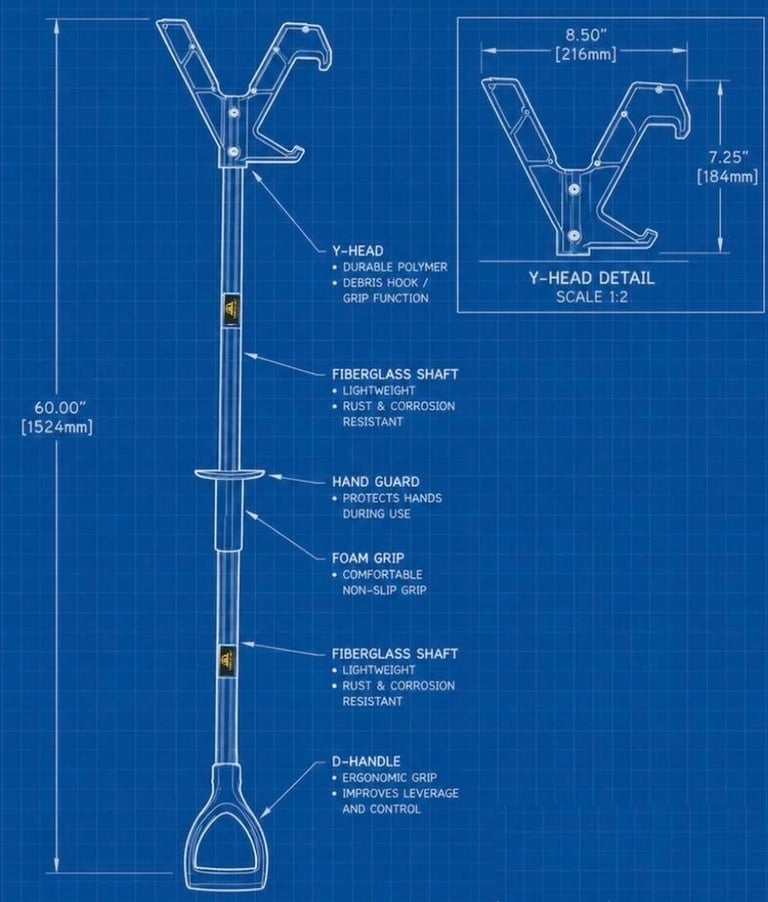
Instead of inserting the head into the shaft:
✔ The Shaft Enters the Head
This improved Industrial Tool Design creates:
A larger contact surface
A continuous load path
Even force distribution
What This Means for Industrial Tool Design Performance
1. No Neck-Down Weakness
The improved Industrial Tool Design eliminates stress concentration points.
2. Better Load Distribution
Force spreads evenly across the structure, improving durability.
3. No Need for Reinforcement
Because the Industrial Tool Design itself is strong:
No carbon sleeves
No patches
No external fixes
4. Reliable Performance in Harsh Conditions
This Industrial Tool Design performs consistently in:
Offshore environments
Industrial operations
High-stress scenarios
Why Industrial Tool Design Directly Impacts Safety
Most hand injuries occur not due to complete failure—but due to:
Loss of control
Sudden tool behavior
Structural instability
Weak Industrial Tool Design increases these risks.
The Risk of Poor Industrial Tool Design
Even a slight flaw in Industrial Tool Design can cause:
Misalignment
Unexpected movement
Operator reaction errors
👉 And that’s when hands enter danger zones.
What to Look for in Industrial Tool Design
Before choosing a tool, evaluate:
Is the load path continuous?
Is there a neck-down region?
Is reinforcement required?
Is strength inherent in the Industrial Tool Design?
Contact us for more details!
Stop relying on reinforced weaknesses. Start choosing engineered strength.
📞 +91 7337577243
📧 info@handhelmet.com
🌐 handhelmet.com
Contact
+91 7729990663
info@handhelmet.com
handhelmet.com