If It’s Close Enough to Reach — It’s Close Enough to Injure
Walk into any industrial site and you’ll see it—cranes lifting loads, chains under tension, workers moving with purpose. Everything looks routine. Controlled. Familiar. And that’s exactly where the danger begins. Because in lifting operations, familiarity doesn’t reduce risk—it hides it.
3/26/20263 min read
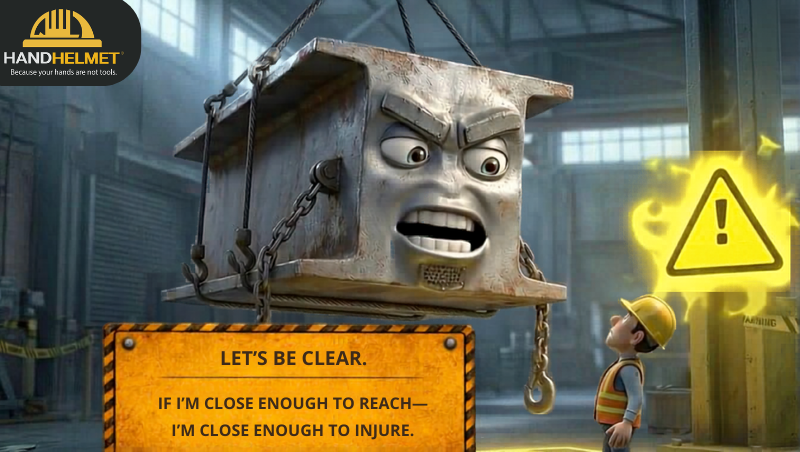
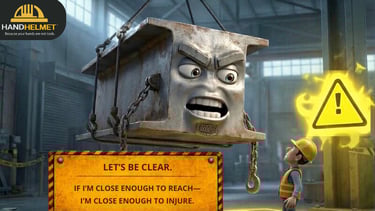
If It’s Close Enough to Reach — It’s Close Enough to Injure
Walk into any industrial site and you’ll see it—cranes lifting loads, chains under tension, workers moving with purpose. Everything looks routine. Controlled. Familiar.
And that’s exactly where the danger begins.
Because in lifting operations, familiarity doesn’t reduce risk—it hides it.
The Lie We Tell Ourselves on Site
“I’ve done this a hundred times.”
“It’ll just take a second.”
“I’ll be careful.”
These are the most dangerous assumptions in any workplace.
Pinch zone injuries don’t happen because people are careless. They happen because people are comfortable.
And comfort leads to proximity.
Understanding the Real Risk: Pinch Zones
A pinch zone is any area where a body part—usually hands or fingers—can get caught between moving objects. Around cranes and hoisting equipment, these zones are everywhere:
Between a suspended load and a fixed surface
Around chains, hooks, and rigging components
Within the swing radius of a load
Between shifting materials during placement
The problem?
They’re not always visible.
Loads don’t stay still.
Chains don’t hang perfectly.
Momentum doesn’t ask for permission.
One small shift. One unexpected swing.
That’s all it takes.
Why Experience Doesn’t Protect You
It’s a hard truth, but it needs to be said clearly:
In high-risk environments, experience can increase exposure.
Experienced workers move faster. They anticipate steps. They take shortcuts—not out of negligence, but efficiency.
But hazards don’t adapt to your experience level.
Steel doesn’t care how skilled you are.
Gravity doesn’t care about your deadlines.
If your hand is in the wrong place at the wrong time, the outcome is the same.
The 3 Questions That Prevent Injuries
Before stepping anywhere near a suspended load, pause and run this mental checklist:
1. Is this lift properly rigged?
Improper rigging increases instability. Instability increases movement. Movement creates unpredictable pinch points.
2. Is everyone clear of the swing radius?
Loads rarely move in straight, predictable paths. Even a slight swing can turn a safe zone into a danger zone instantly.
3. Have I identified ALL pinch points?
Not just the obvious ones. Think secondary movement, shifting loads, and chain behavior.
If you can’t confidently answer all three—you’re not ready to step in.
Distance Is Not Inconvenience — It’s Protection
There’s a reason safety professionals repeat this constantly:
“Stay clear of suspended loads.”
Yet, on-site reality often looks different.
Workers guide loads by hand.
They stand too close to “just adjust” something.
They rely on timing instead of control.
This is where most injuries occur—not during complex operations, but during small, routine interactions.
Replace Hands with Tools, Not Hope
The safest workers aren’t the fastest or the strongest.
They’re the ones who remove themselves from the hazard entirely.
Using tools like push-pull sticks creates a critical buffer between you and the load. It allows control without contact. Precision without exposure.
It’s not about doing the job differently.
It’s about doing it intelligently.
Safety Is Not a Poster — It’s a Pattern
Safety isn’t built in training rooms or printed on banners.
It’s built in micro-decisions:
Choosing distance over speed
Using tools instead of hands
Asking one more question before stepping in
These decisions don’t feel dramatic.
They don’t slow the job down significantly.
But they are the difference between going home safe—or not.
Final Thought
Next time you’re near a crane or a suspended load, remember this:
If it’s close enough to reach — it’s close enough to injure.
Not maybe. Not sometimes.
Always.
So step back.
Create distance.
Stay in control.
Because in this line of work, safety isn’t luck.
It’s discipline.
Upgrade your hand protection with gear engineered for real-world risks.
HandHelmet — Because hands are not tools.
Experience protection that performs where it matters most.
📞 +91 7337577243
🌐 Visit handhelmet.com
📩 info@handhelmet.com
Contact
+91 7729990663
info@handhelmet.com
handhelmet.com