Hand Safety Rules: No Hand Guiding, No Close Contact, No Risk
Hand safety in industrial work: learn why no hand guiding, no close contact, and using push-pull tools can prevent serious workplace injuries.
3/20/20262 min read
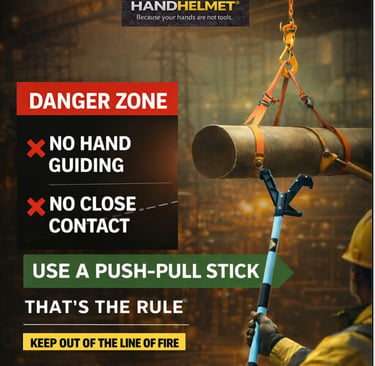
Hand Safety in Industrial Work: Why “No Hand Guiding” is the Golden Rule
Introduction
Hand safety is one of the most critical aspects of workplace safety, especially in industrial environments involving suspended loads. Despite increasing awareness, hand safety incidents continue to occur due to unsafe practices like hand guiding and close contact with moving loads.
At HandHelmet, we strongly believe in hand safety. Our philosophy says: “Because hands are not tools.” This powerful message reinforces the importance of hand safety and reminds us that our hands must be protected—not used as substitutes for equipment.
Understanding the Danger Zone
When dealing with suspended loads, the “danger zone” refers to any area where a worker’s hands are exposed to moving or unstable loads.
Hand safety is compromised when workers:
Guide loads manually
Maintain close contact with suspended objects
Stand within the line of fire
These actions increase the risk of crushing, pinching, and severe hand injuries.
Why Hand Safety is Often Ignored
When dealing with suspended loads, the “danger zone” refers to any area where a worker’s hands are exposed to moving or unstable loads.
Hand safety is compromised when workers:
Guide loads manually
Maintain close contact with suspended objects
Stand within the line of fire
These actions increase the risk of crushing, pinching, and severe hand injuries.
The Risk of Suspended Loads
Suspended loads are unpredictable. From a hand safety perspective, this makes them extremely dangerous.
Loads can:
Swing unexpectedly
Shift due to imbalance
Drop without warning
This is why hand safety protocols strictly prohibit hand guiding and close contact.
Hand Safety Rules You Must Follow
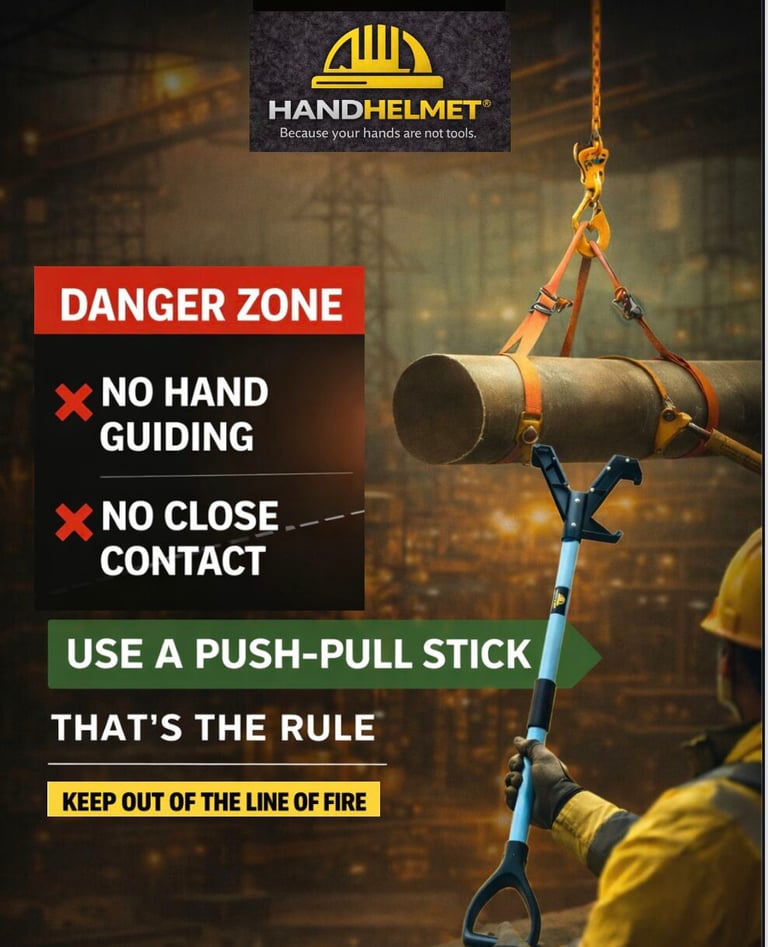
To ensure proper hand safety, industries are adopting these essential rules:
✔ No hand guiding
✔ No close contact
✔ Keep out of the line of fire
Following these hand safety rules minimizes direct exposure to hazards and significantly reduces risk.
The Role of Push-Pull Sticks in Hand Safety
One of the most effective ways to improve hand safety is by using push-pull sticks.
Push-pull sticks help:
Maintain a safe distance from loads
Control and guide objects safely
Reduce dependency on manual handling
By integrating these tools into daily operations, organizations can enhance hand safety and protect workers from preventable injuries.
Benefits of Prioritizing Hand Safety
Strong hand safety practices lead to:
Reduced workplace injuries
Improved productivity
Better compliance with safety standards
Increased employee confidence
Hand safety is not just a rule—it’s a responsibility that impacts both workers and organizations.
Conclusion
Hand safety should never be compromised, especially when working with suspended loads. Simple actions like avoiding hand guiding, maintaining distance, and using push-pull sticks can make a significant difference.
Remember:
No hand guiding. No close contact. Stay out of the line of fire.
Prioritize hand safety today to build a safer workplace for tomorrow.
And always remember: Hand Safety is crucial because hands are not tools.
📞 +91 7337577243
🌐 Visit handhelmet.com
📩 info@handhelmet.com
Contact
+91 7729990663
info@handhelmet.com
handhelmet.com