
Fingersafe Tool
Tata Steel UMC Code 5766A1563 for 12” Tool for Safe Holding of Tools
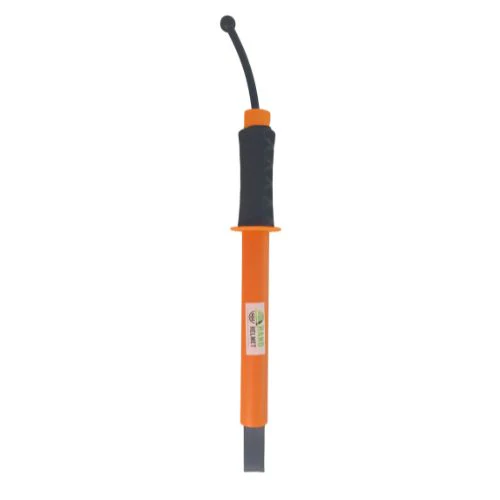
The HandHelmet FingerSafe Tool is an innovative safety device designed to protect workers’ hands and fingers from injuries caused by pinch points, hammer impacts, and other hazards. It is particularly useful in industries like oil and gas, where hand and finger injuries are common. The tool ensures that workers’ hands are kept at a safe distance from dangerous areas, reducing the risk of accidents and enhancing workplace safety.
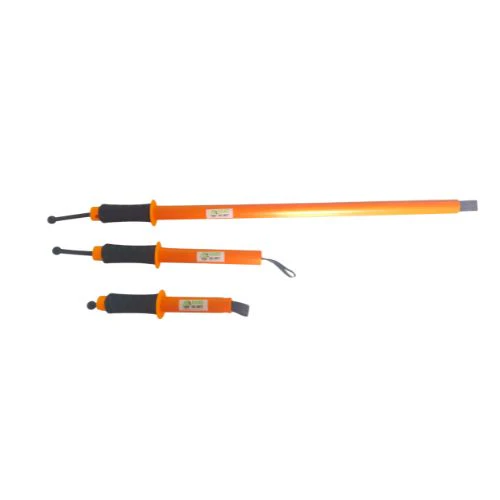
Compact 295mm – Rs. 1,500.00 each
Standard 350mm – Rs. 1,750.00 each
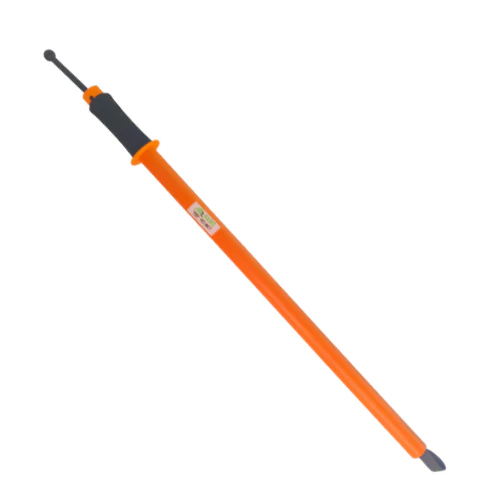
Long 850mm – Rs. 3,500.00 each
GST 18% applicable


Key Features
Sizes: Available in three sizes—Compact (295 mm), Standard (350 mm), and Long (850 mm) to accommodate different tasks and environments.
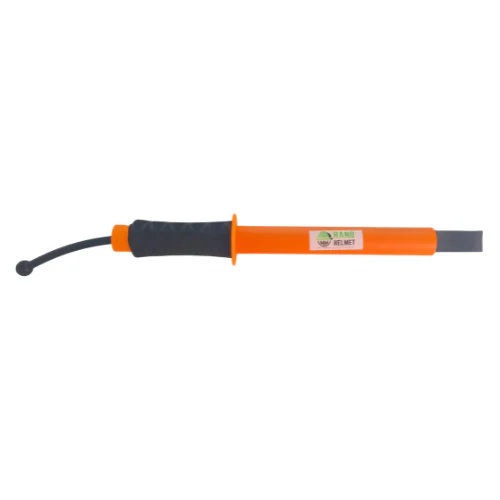
Materials: Made from high-impact Poly Propylene (orange) with an internal strap of Nitrile or Poly-Propylene webbing (black), and a galvanized steel carabiner.
Design: Lightweight, affordable, and easy to operate, providing peace of mind for users and coworkers.
Safety Features: Includes a vibration-absorbing non-slip rubber grip to ensure secure handling.
Benefits
Reduced Injury Risk: Keeps hands away from impact zones, minimizing the risk of finger injuries during tasks involving hammers and impact wrenches.
Enhanced Safety: Provides support equivalent to hands and fingers, ensuring safe operation with tools like flogging spanners.
Increased Efficiency: By reducing accidents, it helps maintain productivity and reduces downtime due to injuries.
Industry Focus: Specifically designed for onshore and offshore oil and gas sectors, where hand and finger injuries are prevalent.

How the FingerSafe Tool Works
Risk Assessment: Always perform a risk assessment before using the tool.
Proper Setup: Securely lock the tool in place using the internal rubber strap.
Safe Handling: Support both the FingerSafe and the selected tool until it is securely positioned, then move hands to the handle grip.
Safety Precautions: Wear safety goggles and use a lanyard when working at heights.
Best Practices for Using
Preventive Measures: Always keep hands away from potential injury zones.
Maintenance: Clean contaminants from the FingerSafe promptly and dispose of it if damaged.
Compliance: Use the FingerSafe as part of a comprehensive safety strategy to prevent hand and finger injuries.
Comparison with Other Safety Tools
While the FingerSafe Tool focuses on hand and finger protection, other safety tools like safety helmets provide comprehensive head protection. Safety helmets are crucial in preventing head injuries from falling objects, electrical shocks, and other hazards, and they also offer psychological comfort and compliance with safety regulations. However, the FingerSafe Tool is unique in addressing the specific risks associated with hand and finger injuries in high-risk industries.

Conclusion
The HandHelmet FingerSafe Tool is a vital safety device for industries where hand and finger injuries are common. By providing a hands-free solution, it significantly reduces the risk of accidents and enhances workplace safety. Its design and features make it an essential tool for maintaining productivity and ensuring worker safety in environments where traditional safety measures may not be sufficient.

FAQ(Frequently Asked Questions)
1. What is a chisel grip used for?
A chisel grip is used to hold and control a chisel during hammering or striking operations while keeping fingers away from the impact zone.
It allows workers to perform chiseling safely without placing hands near the point of strike.
2. Why should a chisel grip be used instead of holding a chisel by hand?
Holding a chisel by hand exposes fingers to:
-
Missed hammer strikes
-
Glancing blows
-
Tool rebound
-
A chisel grip physically removes fingers from the strike path, significantly reducing the risk of crush injuries and amputations.
3. How does a chisel grip improve hand safety?
A chisel grip improves safety by:
-
Increasing distance between fingers and hammer impact
-
Stabilising the chisel during striking
-
Preventing hand slippage due to vibration
It converts a high-risk manual task into a controlled, guided operation.
4. What types of injuries does a chisel grip prevent?
Chisel grips help prevent:
-
Finger fractures
-
Nail and fingertip injuries
-
Crush injuries
-
Partial or full finger amputations
-
Tendon and nerve damage
These injuries are common in maintenance, shutdown, and fabrication work.
5. Is a chisel grip considered PPE or a safety tool?
A chisel grip is considered an engineering control, not PPE.
Unlike gloves, which protect after impact, a chisel grip prevents fingers from being exposed to the hazard in the first place.
6. Does using a chisel grip reduce striking accuracy?
No. A chisel grip often improves accuracy by:
-
Keeping the chisel aligned
-
Reducing tool movement during impact
-
Allowing the striker to focus on force and direction
Better control results in cleaner, safer strikes.
7. Can a chisel grip be used with different chisel sizes?
Most industrial chisel grips are designed to:
-
Fit multiple chisel diameters
-
Maintain a firm grip under vibration
-
Prevent rotation during repeated strikes
Correct sizing and secure fastening are essential for safe use.
8. Does a chisel grip reduce vibration exposure?
Yes. By stabilising the tool and increasing hand distance:
-
Less vibration is transmitted to fingers
-
Hand fatigue is reduced
-
Risk of repetitive strain injuries decreases
This is important for extended chiseling tasks.
9. Can a chisel grip be used in confined spaces?
Yes. Chisel grips are especially useful in confined spaces where:
-
Hand positioning is limited
-
Missed strikes are more likely
They allow safer reach and better visibility while keeping hands protected.
10. What materials are chisel grips designed for?
Industrial chisel grips are built to withstand:
-
Repeated hammer impacts
-
Vibration and shock loads
-
Oil, grease, dust, and harsh environments
They are designed for long-term industrial use.
11. What inspections are required before using a chisel grip?
Before use, check:
-
Grip body for cracks or deformation
-
Clamping mechanism integrity
-
Secure fit on the chisel
-
No excessive wear
Damaged chisel grips must be removed from service immediately.
12. What are common mistakes when using a chisel grip?
Common misuse includes:
-
Not tightening the grip properly
-
Using the wrong grip size
-
Using damaged or worn grips
-
Rushing the task
Most incidents occur due to improper setup, not tool failure.
13. Can a chisel grip replace safety gloves?
No. A chisel grip complements gloves.
Best practice:
-
Gloves protect against cuts and abrasion
-
Chisel grips remove fingers from the impact zone
Both should be used together.
14. Who should use a chisel grip?
Search intent: Who should use a chisel grip tool?
Chisel grips are recommended for:
-
Maintenance technicians
-
Fitters and fabricators
-
Shutdown and turnaround crews
-
Construction and plant workers
Any task involving struck tools benefits from a chisel grip.
Contact Us
Email – info@handhelmet.com
Phone – +91 7337577243